If you run a business or manage marketing for a brand, you've probably noticed that search is changing fast. People are no longer just using Google. They are asking questions to ChatGPT, Perplexity, and other AI chatbots. When someone asks an AI tool about your industry, will your brand show up in the answer? That is where Generative Engine Optimization (GEO) comes in.
Right now, most brands have no idea if their content is being used by AI search engines or if they are getting citations. This is a huge gap. If your competitors are already optimizing for AI visibility and you are not, you are losing potential customers and market share. GEO tools help you track, monitor, and improve how your brand appears in AI-generated search results.
In this guide, we will look at 9 best AI generated GEO tools that can transform how your brand shows up in AI search results. Whether you run a small business, manage a marketing team, or work at an agency, you will find a tool that fits your needs and budget.
What is Generative Engine Optimization and Why Does It Matter
Generative Engine Optimization is the practice of optimizing your website and content so that AI search engines like ChatGPT, Perplexity, Google Gemini, and Claude cite your brand and include your information in their answers. Unlike traditional SEO, which focuses on Google search rankings, GEO focuses on AI-generated answers.
Here is why it matters: AI-generated search results are growing fast. ChatGPT has millions of users daily. Google is adding AI to search results. Perplexity is becoming a popular research tool. When users ask these AI tools questions, they get answers that include citations to websites. If your brand is cited often, you gain authority, traffic, and trust.
Without GEO, you have no visibility into whether AI engines are using your content. With GEO tools, you can see exactly which AI platforms mention your brand, what they say about you, which of your competitors are winning, and what content changes you need to make.
Quick Comparison Table of Top 9 GEO Tools
| Tool Name | Best For | Starting Price | Free Trial | Top Feature |
|---|---|---|---|---|
| Profound | Enterprise teams and large agencies | $499/month | Free demo | Most comprehensive AI visibility platform |
| AthenaHQ | Brands wanting deep competitive analysis | $295/month | No | Real-time prompt analytics and sentiment tracking |
| Writesonic GEO | Content-focused teams | $199/month | Yes | Built-in AI content creation with GEO optimization |
| Peec AI | Mid-market businesses and startups | $97/month | 14 days | Affordable, real-time brand monitoring |
| Semrush AI Toolkit | Teams already using Semrush for SEO | $99/month | Free demo | Integrated SEO and GEO in one platform |
| Goodie AI | Brands wanting all-in-one solution | Custom pricing | Free audit | End-to-end GEO monitoring and recommendations |
| Frase.io | Solo creators and small teams | Free tier available | Yes | Free plan plus affordable content creation |
| Search Party | Teams needing simple, direct tracking | $199/month | 7 days free | Real user prompt data from AI engines |
| Geostar | Agencies offering GEO services | $249/month | Free audit | Source tracking and AI crawler monitoring |
9 Best AI Generated GEO Tools Explained in Detail
1. Profound – The Market Leader for Enterprise GEO
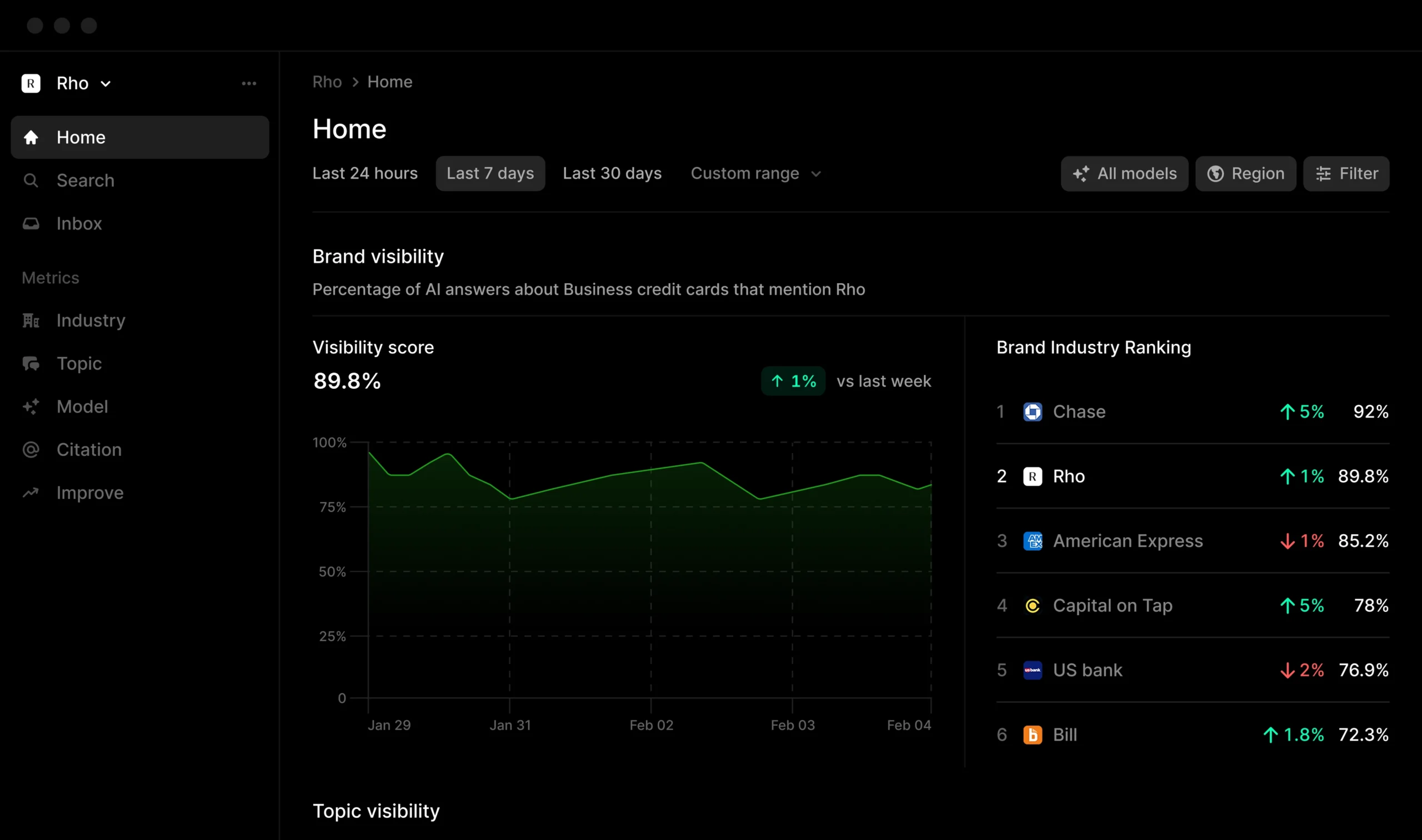
Profound is the most comprehensive GEO platform available today. If you work at a large company or manage a brand that depends on AI visibility, Profound is the gold standard. It was built from academic research and has the backing of major venture capital firms.
Key Features:
- Real-time tracking across ChatGPT, Perplexity, Google Gemini, and Claude
- Citation analysis showing exactly which AI models use your content
- Dedicated AI search strategist support on enterprise plans
- Multi-language and multi-market support for global brands
- Advanced competitive benchmarking and share-of-voice metrics
Pros: Most powerful feature set, fastest at identifying new AI platforms, enterprise-grade integrations, highest data quality from live user interactions.
Cons: Expensive ($499+/month), requires implementation time, may be overkill for small businesses.
Best For: Fortune 500 companies, multinational brands, agencies managing multiple large clients, regulated industries needing audit trails.
Pricing: Lite plan at $499/month, Agency Growth at $1,499/month, custom enterprise pricing available.
2. AthenaHQ – Best for Deep Competitive Intelligence
AthenaHQ was founded by former Google engineers and AI specialists. It focuses on showing you not just where you appear in AI results, but also how you compare to competitors and what prompts trigger mentions of your brand.
Key Features:
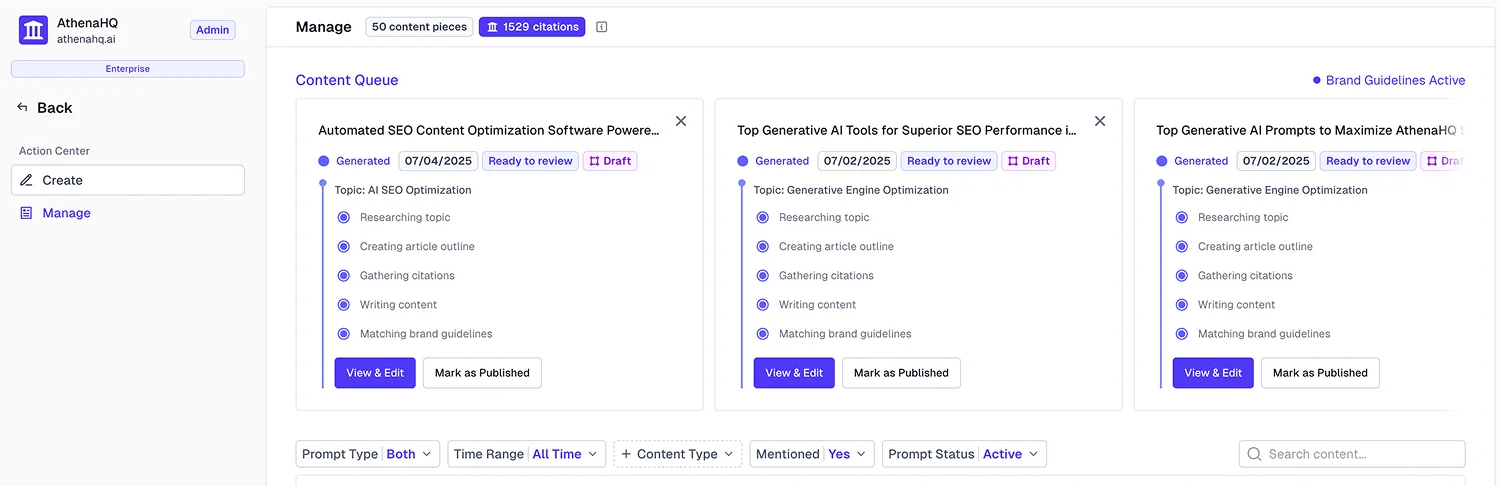
- Olympus Dashboard combining citation count, sentiment, and traffic impact
- 3 million response catalog mapped to over 300,000 websites
- Action Center with specific optimization recommendations
- Full-stack GEO dashboards with content gaps and sentiment analysis
- Competitor benchmarking across AI platforms
Pros: Fastest GEO platform available, excellent for competitive analysis, real user prompt data, comprehensive action recommendations.
Cons: Starting price of $295/month is high for small teams, no public pricing transparency for higher tiers.
Best For: Competitive brands, enterprises in crowded markets, teams that prioritize competitive intelligence.
Pricing: Starts at $295/month, custom enterprise pricing available.
3. Writesonic GEO – Best for Content Teams
Writesonic takes a different approach. Instead of just tracking AI visibility, it helps you identify gaps and then creates optimized content to fill those gaps. This is perfect if you have a content team that needs to work fast.
Key Features:
- Brand Presence Explorer showing visibility and sentiment
- AI Traffic Analytics showing which bots crawl your site
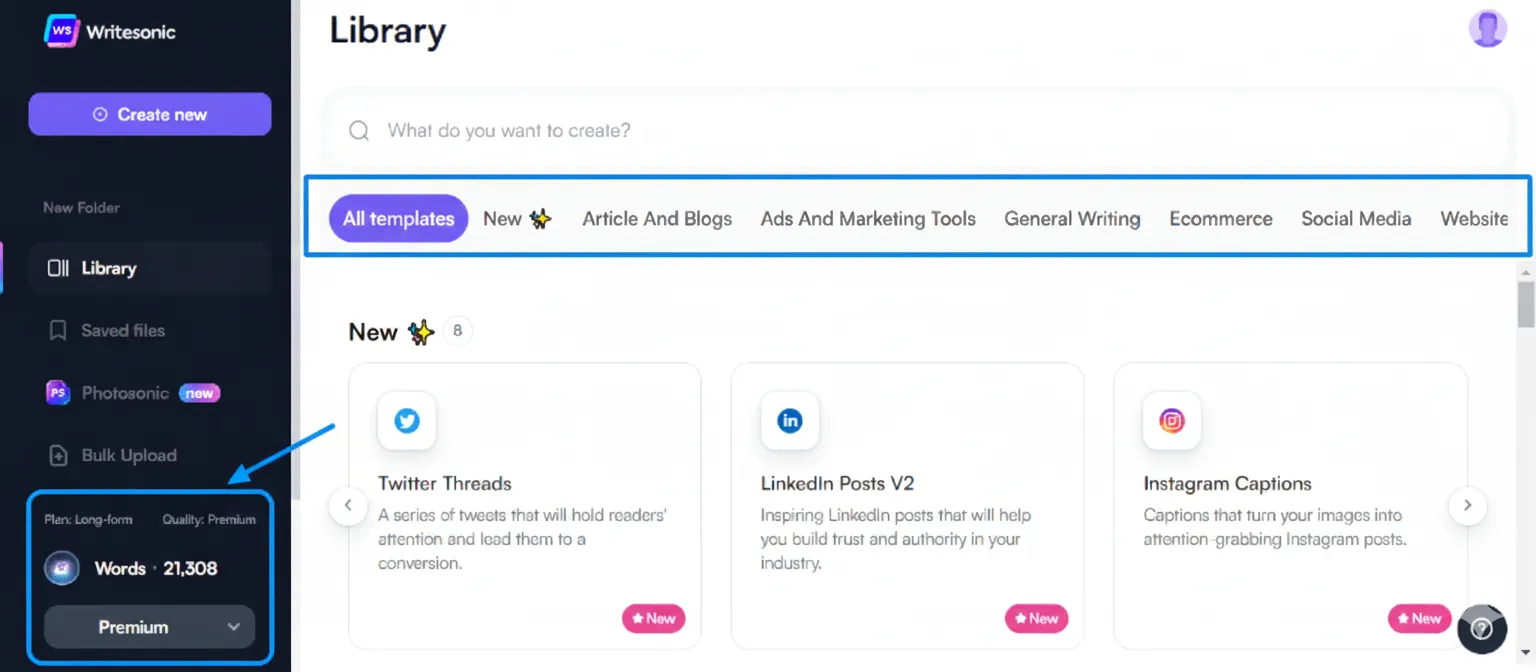
- Built-in AI content writer optimized for GEO
- Prompt and citation analysis for content planning
- LLM-driven FAQ and Q&A block generation
Pros: Unique combination of GEO tracking and content creation, speeds up optimization cycles, affordable compared to competitors, user-friendly interface.
Cons: Content creation may not match quality of professional writers, less detailed competitive analysis than some alternatives.
Best For: Content marketing teams, SaaS companies, businesses that publish frequently, creators looking for all-in-one solution.
Pricing: Starts at $199/month for AI Search Tracking features.
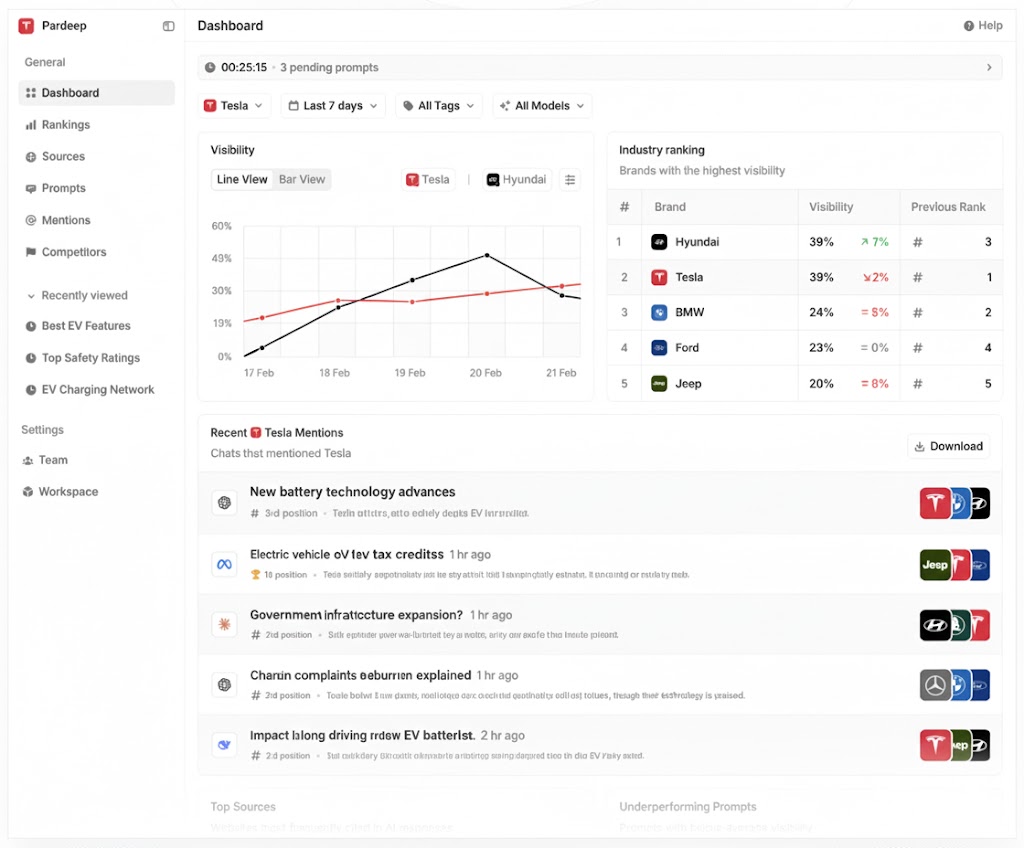
4. Peec AI – Best Affordable Option for Growing Teams
Peec AI proves that you do not need to spend $500/month to track AI visibility. This platform offers real monitoring and analysis at a fraction of the cost. It is perfect for startups and mid-market companies.
Key Features:
- Real-time brand monitoring across AI platforms
- Custom prompt library for tracking specific questions
- Citation tracking showing which sites are cited instead of yours
- Competitive analysis and trend data
- Dashboard showing visibility trends over time
Pros: Affordable pricing ($97/month entry point), clean dashboard, good for emerging platform coverage, fast customer support.
Cons: Newer platform with fewer enterprise integrations, less robust than Profound or AthenaHQ.
Best For: Early-stage companies, marketing startups, teams testing GEO for the first time, budget-conscious businesses.
Pricing: Starter at $97/month, Pro at $217/month, Enterprise plans available.
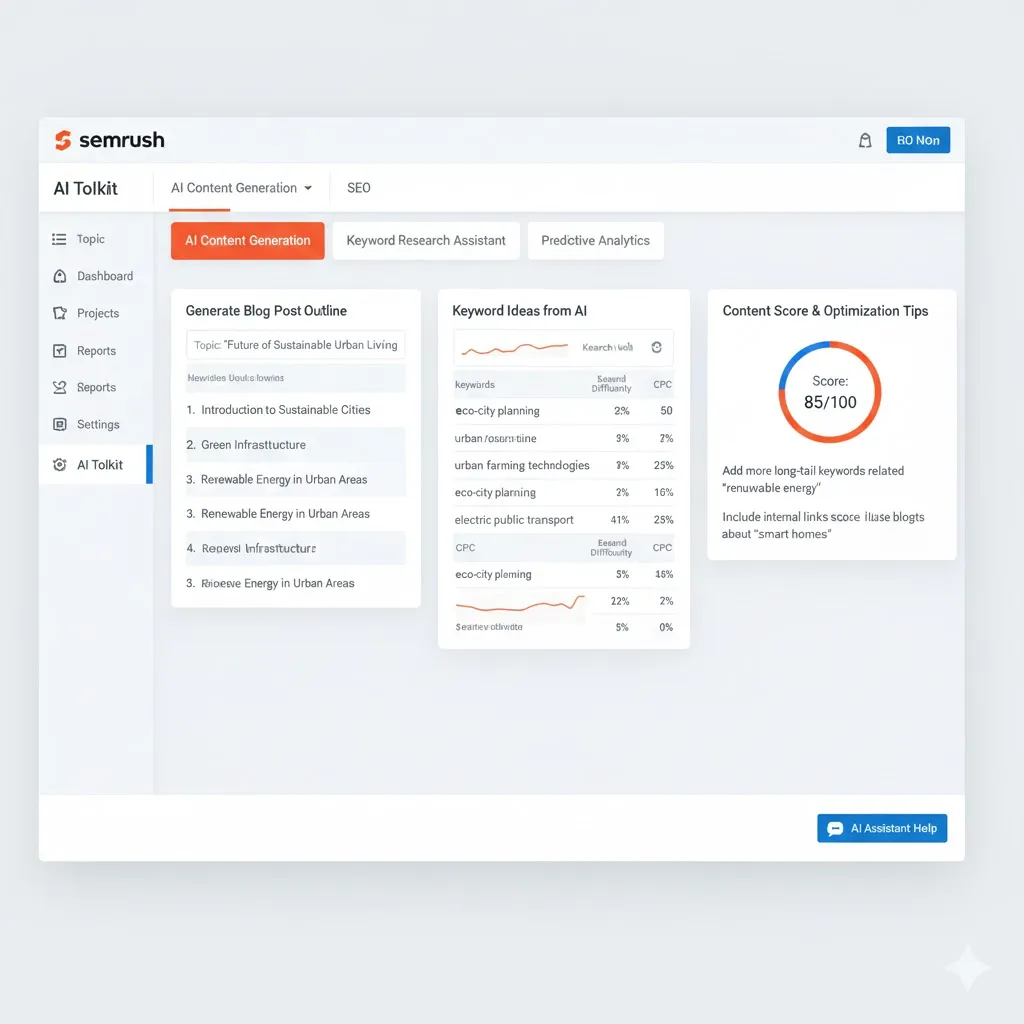
5. Semrush AI Toolkit – Best for Existing Semrush Users
If your team already uses Semrush for SEO, adding the AI Toolkit is a natural next step. You get GEO capabilities without switching platforms or learning a new system.
Key Features:
- AI Visibility Tracker showing brand appearance in AI answers
- Integrated SEO and GEO in one dashboard
- Question reports showing real questions people ask AI about your brand
- Tracking across ChatGPT, Google AI, Gemini, and Claude
- Brand perception insights and sentiment analysis
Pros: Seamless integration with existing Semrush account, established company with strong support, familiar interface for current users, good data quality.
Cons: Only for existing Semrush users, GEO features less advanced than dedicated platforms, requires additional cost on top of Semrush subscription.
Best For: Semrush subscribers, teams managing both traditional SEO and GEO, companies wanting one tool for all search optimization.
Pricing: $99/month per domain for standalone toolkit.
6. Goodie AI – Best All-in-One Solution
Goodie AI takes a comprehensive approach to generative engine optimization. It combines monitoring, analysis, and optimization recommendations in one platform designed specifically for teams that want end-to-end GEO.
Key Features:
- AI search visibility monitoring across platforms
- Real-time brand mention tracking
- Content optimization recommendations
- User-friendly interface focused on actionability
- Integration with existing marketing workflows
Pros: Comprehensive all-in-one approach, user-friendly for non-technical teams, real-time updates, broad AI platform coverage.
Cons: Custom pricing means you need to contact sales, pricing not transparent, may have integration gaps with some tools.
Best For: Marketing teams wanting simplicity, brands new to GEO, companies preferring vendors to handle everything.
Pricing: Custom pricing with free one-time audit available.
7. Frase.io – Best Free Option to Start
Frase gives you a real, usable free plan to start tracking AI visibility. No credit card required. This is the lowest barrier to entry if you want to test GEO before committing money.
Key Features:
- Free tier with 15 content projects per month
- SEO and GEO optimization in one tool
- Real-time tracking of ChatGPT and Perplexity citations
- Content opportunity framework (Fix/Boost/Fill)
- Brand voice customization for content creation
Pros: Truly free plan to get started, transparent pricing, no credit card required, good for content creators, fast learning curve.
Cons: Free tier limited (15 projects/month), AI-generated content quality varies, less advanced analytics than premium tools.
Best For: Solo content creators, small businesses testing GEO, agencies exploring new tools, budget-conscious marketers.
Pricing: Free tier available, paid plans start at $38/month.
8. Search Party – Best for Simple, Direct Tracking
Search Party keeps things simple. It tracks how your brand appears in AI answers without overwhelming you with features you do not need. The data comes from real user prompts, not API calls, making it more accurate.
Key Features:
- Real user prompt data from major AI engines
- Clear visibility reports showing where you appear
- Insights highlighting missing opportunities
- Simple dashboard easy to understand
- Competitive benchmarking against industry peers
Pros: Simple and easy to use, real user data (not API-based), 7-day free trial, good for teams wanting clarity, actionable insights.
Cons: $199/month entry point is steep for startups, limited content recommendations, fewer advanced features than competitors.
Best For: Mid-market companies, teams wanting simplicity, brands new to GEO, companies wanting quick insights.
Pricing: Free 7-day trial, then $199/month, custom enterprise plans available.
9. Geostar – Best for Agencies and Source Tracking
Geostar focuses on something unique: showing you which of your specific pages are being used as sources in AI answers. This is powerful for content strategy. It also offers managed services if you want Geostar to handle optimization for you.
Key Features:
- Page-level source tracking in AI answers
- AI crawler monitoring and analysis
- Visibility tracker showing citation trends
- Managed GEO services option for agencies
- Custom outreach support from experts
Pros: Unique page-level tracking, excellent for agencies, managed services available, good for understanding crawler behavior.
Cons: $249/month entry point, requires technical knowledge to maximize value, less user-friendly than some competitors.
Best For: Agencies offering GEO services, enterprise-level brands, companies wanting managed GEO support, technical teams.
Pricing: Lite plan at $249/month, Enterprise and Full-Service options with custom pricing.
Side-by-Side Comparison Table of All 9 Tools
| Feature | Profound | AthenaHQ | Writesonic | Peec AI | Semrush | Goodie AI | Frase | Search Party | Geostar |
|---|---|---|---|---|---|---|---|---|---|
| Price Range | $499+ | $295+ | $199+ | $97+ | $99+ | Custom | Free-$X | $199+ | $249+ |
| Free Trial | Demo | No | Yes | 14 days | Demo | Free audit | Yes | 7 days | Free audit |
| Real User Data | Yes | Yes | No | Yes | Partial | Yes | Partial | Yes | Yes |
| Content Creation | No | No | Yes | No | No | No | Yes | No | No |
| Competitive Analysis | Yes | Excellent | Basic | Yes | Yes | Yes | Basic | Yes | Yes |
| Sentiment Tracking | Yes | Yes | Partial | No | Yes | Yes | No | No | No |
| Multi-Platform Coverage | 5+ | 4+ | 3+ | Multiple | 4+ | Multiple | 2 | 3+ | Multiple |
| Ease of Use | Moderate | Moderate | Easy | Easy | Moderate | Very Easy | Easy | Very Easy | Moderate |
| Best For | Enterprise | Competitive | Content Teams | Startups | SEO Users | Simplicity | Free Option | Simplicity | Agencies |
How to Choose the Right GEO Tool for Your Needs
Choosing a GEO tool depends on your budget, team size, and specific needs. Here is a breakdown by scenario:
If You Are a Small Business or Startup
Start with the free tier of Frase or Peec AI. These tools let you begin tracking AI visibility without spending money. Once you understand the value, you can upgrade to a paid plan. Peec AI at $97/month is the most affordable paid option with full features.
If You Are a Content-Focused Team
Writesonic GEO is your best choice. It combines tracking with content creation, so you can identify gaps and fix them in one platform. This saves time and money compared to using separate tools.
If You Manage Multiple Brands or Are an Agency
Geostar or Profound are designed for your use case. Geostar offers managed services if you want experts handling the work. Profound gives you the most comprehensive platform for managing multiple client brands.
If You Already Use Semrush for SEO
Simply add the AI Toolkit to your existing Semrush account. You already know the platform, and you will not have to switch tools.
If You Want Maximum Competitive Intelligence
AthenaHQ is the fastest and most detailed platform for understanding how competitors rank in AI search. The data quality is excellent, and the competitive analysis is unmatched.
If You Need an Enterprise Solution
Profound is the clear market leader. It is used by Fortune 500 companies and includes a dedicated strategist to help you win in AI search.
Essential GEO Optimization Tips and Tricks for 2026
Having a GEO tool is step one. Using it correctly is step two. Here are practical tips to actually improve your AI visibility:
1. Create Content That Directly Answers AI Prompts
AI engines use your content to answer user questions. Write clear, detailed answers to common questions in your industry. Use your GEO tool to see which questions trigger mentions of your competitors, then create better answers to those same questions.
2. Build Authority and Backlinks
AI search engines value authority. Websites cited frequently in traditional Google results are more likely to be cited by AI. Focus on earning quality backlinks and being featured in industry publications. This benefits both traditional SEO and GEO.
3. Update Content Regularly
AI crawlers prefer fresh content. If you published something two years ago and have not updated it, you are falling behind competitors. Use your GEO tool to identify which of your content is losing citations, then update and republish it.
4. Use Structured Data and Schema Markup
AI engines read schema markup to understand what your content is about. Make sure your website uses proper schema for articles, products, reviews, and other content types. This helps AI systems understand and cite your content correctly.
5. Monitor Your Competitors
Your GEO tool shows you which competitors are winning in AI search. See what they are writing about, what questions they rank for, and how often they get cited. Use this intelligence to outpace them.
6. Track Sentiment, Not Just Citations
Getting cited is good. Getting cited positively is better. Use tools like AthenaHQ that track sentiment to see if AI engines are saying positive or negative things about your brand.
7. Create Comparison Content
AI engines love comparison content because it answers multiple questions at once. Create detailed comparisons of your product with competitors. This attracts AI citations and answers user questions comprehensively.
Need Professional Help with GEO Optimization
If your team is overwhelmed with GEO or needs specialized help, consider hiring a freelancer or agency to manage it. Platforms like Fiverr have specialists who understand generative engine optimization and can help you optimize your content for AI visibility.
Hire GEO Experts on Fiverr
Looking for a GEO optimization specialist to help your brand? Fiverr has freelancers experienced in generative engine optimization, content strategy, and AI-ready website optimization. Get professional help without hiring full-time staff.
Frequently Asked Questions About GEO Tools and Generative Engine Optimization
What is the Difference Between SEO and GEO
SEO (Search Engine Optimization) focuses on getting your website to rank higher on Google search results. GEO (Generative Engine Optimization) focuses on getting your content cited and featured in AI-generated answers from ChatGPT, Perplexity, Google Gemini, Claude, and similar platforms. Both are important in 2026, but most brands are still ignoring GEO.
Which AI Platforms Should I Focus On for GEO
The biggest ones are: ChatGPT (most users), Perplexity (research focus), Google Gemini (in Google search results), Claude (enterprise adoption), and Google AI Overviews. Most GEO tools track these top platforms. Start by monitoring all of them, then double down on the ones that send the most relevant traffic to your website.
Do I Need to Change My Content Strategy for GEO
Not drastically. Good content for traditional SEO is usually also good for GEO. The difference is that GEO content should more directly answer specific questions that people ask AI. Use your GEO tool to see what questions trigger mentions of your competitors, then create content that answers those questions better.
How Long Does It Take to See Results from GEO Optimization
Faster than traditional SEO. Many brands see AI visibility improvements within 2-4 weeks of publishing optimized content. This is because AI systems crawl websites frequently and are eager for fresh, relevant content. Track your results with your chosen GEO tool to stay motivated.
Is GEO Important for My Business
Yes, especially if your customers use AI tools for research or decision-making. B2B SaaS, ecommerce, professional services, and content-heavy industries benefit most from GEO. If your customers are asking AI about products or topics in your industry, you need to be visible in those answers.
Can I Do GEO Without Hiring Help
Yes, absolutely. With a GEO tool and the tips in this guide, you can optimize your content yourself. Start with free tools like Frase to learn what works. If you get stuck or want to move faster, that is when you consider hiring help on Fiverr or similar platforms.
Which GEO Tool is Best for Beginners
Start with Frase (free tier, easy to use) or Search Party (7-day free trial, super simple dashboard). Both let you start learning without spending money. Once you understand GEO and see value, upgrade to a paid tool that matches your needs and budget.
Is AI Search Going to Replace Google
No, but it is becoming an additional search channel. People will continue to use Google, but they will also ask ChatGPT, Perplexity, and other AI tools. Smart brands optimize for both traditional SEO and GEO. It is not either-or, it is both-and.
What Content Performs Best in AI Search
Content that directly answers questions, provides clear explanations, includes data and statistics, and offers unique perspectives. AI systems want content that gives users accurate, helpful answers. Listicles (like this article), comparison guides, how-to content, and expert perspectives perform especially well.
How Often Should I Update My Content for GEO
At least quarterly. AI systems favor fresh content. If you published something and have not touched it in six months, you are losing citations to competitors who update frequently. Set a schedule to review and update your best content every three to six months.
Conclusion and Next Steps
Generative engine optimization is no longer optional. AI search is growing, and brands that are not optimizing for it are falling behind. The good news is that getting started is simple and affordable.
Here is your action plan:
This Week: Pick one GEO tool from this list. If you are on a budget, start with Frase (free tier) or Peec AI (14-day trial). Spend a few hours getting to know the platform and seeing where your brand currently appears in AI search.
Next Week: Identify your top three missed opportunities. These are questions that trigger competitor citations but not yours. Plan content to answer these questions better.
This Month: Create and publish optimized content. Use the tips in this guide. Track your AI visibility improvement with your chosen tool.
Your competitors are already moving on GEO. Do not get left behind.
Ready to Boost Your AI Search Visibility
Choose one of the 9 GEO tools above and start tracking your brand in AI search today. Most offer free trials or free tiers, so there is no reason to wait.
Your brand visibility in AI search matters now. Take action today.

Jiya Malik
Jiya is a Market Research Analyst at Shrtu. She has completed her Bachelor's degree majoring in Management and double minoring in Economics and Communications. Prior to joining Shrtu, Yukta spent a year exploring roles like marketing ops, research, and GTM enablement in the B2B SaaS start-up ecosystem. She is passionate about brand and content marketing, consumer behavior research, and market research. She is keen on learning more about the world of data and research and exploring different industries and market sectors. This is because she believes creativity backed up with data points is very rational and convincing. After work, you can see Yukta exploring cafes, cooking, journaling, or working out.


I would like to thnkx for the efforts you have put in writing this site. I am hoping the same high-grade blog post from you in the upcoming also. Actually your creative writing abilities has encouraged me to get my own blog now. Really the blogging is spreading its wings fast. Your write up is a good example of it.