
When you are searching for a customer relationship management platform, you will often come across two names that dominate the market – HubSpot and Salesforce. Both are powerful CRM tools that can transform how your business manages customer data and sales operations. However, choosing between HubSpot vs Salesforce depends on your business size, budget, technical capabilities, and specific needs.
In this comprehensive guide, we will examine every aspect of both platforms to help you make an informed decision. Whether you are a small business owner looking for an affordable CRM solution or an enterprise seeking advanced customization options, this comparison will provide all the information you need.
What is HubSpot and What is Salesforce?
HubSpot is a modern, user-friendly CRM platform designed primarily for small to medium-sized businesses (SMBs) and marketing-focused teams. Built with simplicity in mind, HubSpot offers an all-in-one platform that combines sales, marketing, customer service, operations, and content management tools in one unified system. The platform is known for its intuitive interface, making it accessible even to users without technical backgrounds.
Salesforce is an enterprise-level CRM platform that has dominated the customer relationship management market for over two decades. With approximately 23 percent market share, Salesforce is the undisputed market leader in CRM solutions. It is designed to handle complex business operations, extensive customization requirements, and serves thousands of companies worldwide, from startups to multinational enterprises.
Key Difference Between HubSpot and Salesforce
The fundamental difference between HubSpot vs Salesforce lies in their target markets and approach to customer relationship management. HubSpot prioritizes ease of use and integration of marketing tools, making it an excellent choice for businesses that value simplicity and speed of implementation. Salesforce, conversely, prioritizes customization depth and advanced functionality, serving organizations with complex needs and larger budgets.
HubSpot vs Salesforce: Detailed Feature Comparison
| Feature | HubSpot | Salesforce |
|---|---|---|
| Ease of Use | Very intuitive and user-friendly | Steeper learning curve, more complex |
| Customization | Limited but growing capabilities | Enterprise-grade, extensive customization |
| Free Plan/Trial | Free plan with core CRM features | 30-day free trial only |
| Implementation Time | 2-4 weeks average | 12-16 weeks average for enterprises |
| AI Capabilities | Breeze AI for SMB automation | Einstein AI with advanced features |
| Reporting & Analytics | Basic to intermediate dashboards | Advanced, customizable, predictive |
| Mobile App | Lightweight and intuitive | Comprehensive with offline mode |
| Target Market | SMBs and mid-market | Large enterprises and complex operations |
| Support for Complex Workflows | Good for standard processes | Excellent for multi-layered operations |
| Integrations | 1,000+ apps and integrations | 3,000+ apps via AppExchange |
HubSpot Pricing Structure
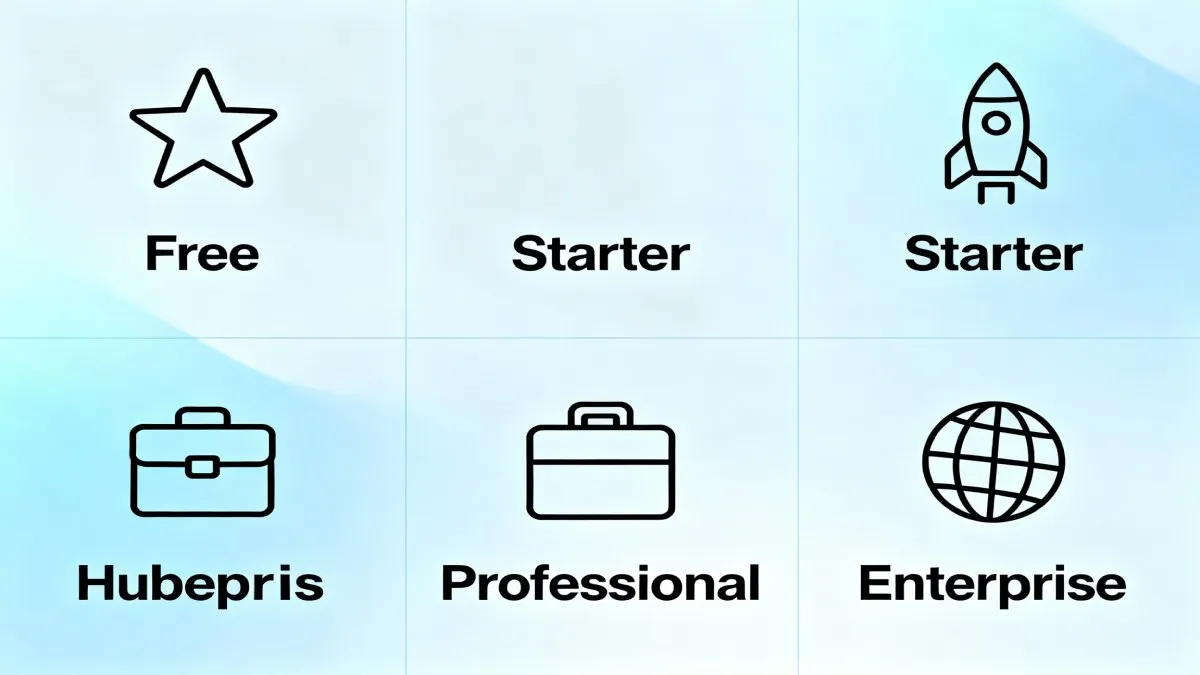
HubSpot offers a transparent and scalable pricing model designed to grow with your business. Here is the breakdown of HubSpot pricing tiers:
HubSpot Free Plan: This plan includes core CRM functionality, contact management, deal tracking, basic email tools, and support for up to two users. Perfect for businesses just starting with customer relationship management.
HubSpot Starter Plan: Starting from $9 per user per month (billed annually), this plan adds features like basic automation, conversation routing, and task management.
HubSpot Professional Plan: Priced from $90 per user per month, this tier unlocks advanced marketing automation, predictive lead scoring, custom reporting, and workflow automation tools.
HubSpot Enterprise Plan: Starting at $150 per user per month, the Enterprise plan provides unlimited users for certain features, advanced analytics, custom objects, and dedicated support.
One major advantage of HubSpot pricing is transparency. Most features are native to the platform, meaning you do not typically need expensive add-ons or third-party tools to access core functionality. This makes it easier to predict your total cost of ownership.
Salesforce Pricing Structure
Salesforce uses a per-user, per-month licensing model with multiple tiered editions. Here is a breakdown of Salesforce pricing options:
Salesforce Starter Suite: $25 per user per month offers basic CRM functionality but lacks advanced features like automation, forecasting, and comprehensive reporting.
Salesforce Professional Suite: $100 per user per month includes forecasting, sales automation, custom reports, and more advanced sales tools.
Salesforce Enterprise Edition: $165 per user per month provides workflow automation, territory management, opportunity scoring, and advanced reporting capabilities.
Salesforce Unlimited Edition: $330 per user per month offers the most comprehensive features, including Agentforce capabilities and maximum customization options.
Salesforce Agentforce 1 Sales: $550 per user per month brings autonomous AI agents to sales operations.
A critical consideration with Salesforce pricing is that many essential features require separate purchases. For example, to add marketing automation capabilities, you need to purchase Marketing Cloud Account Engagement (formerly Pardot), which can cost up to $4,000 per month. Similarly, advanced reporting tools and other specialized features often come with additional fees.
HubSpot vs Salesforce: Pricing Comparison – Which is More Affordable?
When comparing HubSpot vs Salesforce on pricing, HubSpot generally offers better value for small to medium-sized businesses. The free tier alone gives HubSpot a significant advantage over Salesforce, which offers only a 30-day trial. Additionally, HubSpot's bundled approach means most features are included in your plan without requiring expensive add-ons.
For large enterprises, the cost comparison becomes more complex. While Salesforce has higher per-user costs, the total cost difference depends on whether you need the extensive add-ons that Salesforce requires to match HubSpot's feature set. Many businesses find that HubSpot's pricing remains more predictable and affordable as they scale up.
Cost advantage: HubSpot for SMBs and mid-market businesses; Salesforce may become competitive for large enterprises with complex needs.
Salesforce vs HubSpot: Ease of Use and User Interface
HubSpot Ease of Use: HubSpot is renowned for its clean, modern, and intuitive interface. The platform requires minimal training, with most users becoming productive within hours of setup. The drag-and-drop workflow builder, straightforward navigation, and well-organized dashboards make HubSpot accessible to team members with varying levels of technical expertise. User adoption rates for HubSpot typically exceed 90 percent, demonstrating how well the interface resonates with teams.
Salesforce Ease of Use: Salesforce has a steeper learning curve. The platform is more complex and feature-rich, requiring more time for users to become comfortable with navigation and workflows. Many organizations invest in formal training programs or hire Salesforce administrators specifically to manage the system. However, Salesforce offers Trailhead, a free learning platform that provides self-paced training modules to help users master the system.
For organizations prioritizing quick implementation and rapid user adoption, HubSpot wins on ease of use. For enterprises with dedicated IT teams and resources for training, Salesforce's complexity becomes less of a barrier.
Implementation and Deployment: HubSpot vs Salesforce
HubSpot Implementation: Average implementation time for HubSpot ranges from 2 to 4 weeks. Many businesses can have their Sales Hub operational within this timeframe because the platform comes with sensible defaults that work well out of the box. Organizations report that 64 percent of HubSpot implementations take 3 months or less. The quick implementation means faster return on investment and faster time to value.
Salesforce Implementation: Salesforce implementations typically take 12 to 16 weeks on average for enterprise deployments. Some complex implementations can extend to 6 months or longer. Salesforce requires more detailed configuration, customization, and integration work. Organizations typically need dedicated project managers and external consultants to manage the implementation process effectively. However, Salesforce reports that small businesses can implement the platform in as little as 17 days with its out-of-the-box solutions.
For businesses that need to get up and running quickly, HubSpot significantly reduces time to deployment. For enterprises already familiar with Salesforce or those with existing Salesforce investments, the longer implementation time may be acceptable for the advanced capabilities offered.
AI and Automation: HubSpot vs Salesforce
HubSpot AI – Breeze Suite: HubSpot offers its Breeze AI suite, which includes Breeze Copilot, Breeze Agents, and Breeze Intelligence. These tools help with:
-
In-app assistance for real-time CRM data analysis
-
Automated lead nurturing workflows
-
Lead enrichment using HubSpot's 200 million company database
-
Predictive automation for common sales tasks
HubSpot's AI is designed to be easy to use and quickly implementable for SMBs. The AI handles routine tasks like lead scoring, email follow-ups, and task automation with minimal configuration.
Salesforce AI – Einstein Suite: Salesforce offers Einstein AI, a more advanced artificial intelligence system that includes:
-
Predictive lead scoring with high accuracy
-
Automated data entry and enrichment
-
Advanced forecasting capabilities
-
Einstein Analytics for predictive modeling
-
Industry-specific AI models (healthcare, manufacturing, retail)
-
Voice analytics with 93 percent accuracy for predicting deal outcomes
Salesforce AI is more sophisticated and tailored for large-scale, data-driven organizations. It can handle complex automation scenarios and provides deeper predictive insights. However, it requires more technical setup and expertise to implement effectively.
AI Advantage: Salesforce for advanced predictive analytics and complex automation; HubSpot for quick, easy-to-implement AI features.
Reporting and Analytics Capabilities
HubSpot Reporting: HubSpot provides clear, easy-to-configure dashboards. Users can create custom reports quickly using templates or building from scratch. The reporting includes pipeline visibility, marketing performance tracking, and customer service metrics. However, advanced segmentation and complex cross-reporting may require upgrading to higher-tier plans. HubSpot's dashboards are very user-friendly and require minimal training to understand and use.
Salesforce Reporting: Salesforce excels in reporting and analytics capabilities. The platform allows for highly customized reports, cross-data analysis, and predictive insights. With Einstein Analytics, Salesforce users can generate advanced predictive reports that forecast outcomes and recommend actions. The reporting capabilities are unmatched for data-heavy organizations requiring deep analytical insights.
Advanced reporting is available in both platforms but requires higher-tier plans. Salesforce offers significantly more power and flexibility for organizations that depend on detailed analytics and complex reporting.
Reporting Advantage: Salesforce for advanced analytics and predictive reporting; HubSpot for quick, accessible dashboards.
Customization Capabilities: HubSpot vs Salesforce
HubSpot Customization: HubSpot allows UI customization, workflow automation, and some custom object creation in higher tiers. However, customization is somewhat limited compared to Salesforce. Developers cannot custom-build widgets or extensively modify the platform at the code level. Most customization happens through HubSpot's interface using pre-built tools and options. For standard business processes, HubSpot customization is more than sufficient. For highly unique or complex requirements, HubSpot may fall short.
Salesforce Customization: Salesforce offers enterprise-grade customization capabilities. Businesses can create custom objects, fields, workflows, and entire custom applications. Developers have access to Apex (a Java-like programming language), Visualforce (for building custom interfaces), and Lightning components. This allows organizations to tailor Salesforce to virtually any business requirement. The customization depth is unparalleled in the CRM market.
For businesses with standard sales processes and common CRM needs, HubSpot customization is adequate. For enterprises with unique business models or complex requirements, Salesforce customization capabilities are essential.
Customization Advantage: Salesforce for deep, enterprise-grade customization.
Integration and Ecosystem: Salesforce vs HubSpot
HubSpot Integrations: HubSpot offers over 1,000 pre-built integrations with popular business tools. The platform is designed to work well with other applications through its native integration marketplace. Setup is usually straightforward, with most integrations available with just a few clicks. HubSpot prioritizes a cohesive user experience, which means integrations maintain the platform's ease of use and unified feel.
Salesforce Integrations: Salesforce offers over 3,000 integrations through its AppExchange marketplace. The platform can connect with virtually any enterprise software system. However, setup can be more technical and may require custom API development or middleware tools like Zapier or Workato. The sheer volume of options makes Salesforce the choice for organizations with complex technology stacks requiring deep system integrations.
For most businesses, HubSpot's 1,000-plus integrations are sufficient. For enterprises with extensive technology ecosystems, Salesforce's larger integration marketplace provides more options.
HubSpot Strengths and Weaknesses
HubSpot Strengths:
-
Intuitive interface requiring minimal training
-
Free tier and affordable pricing with transparent costs
-
Fast implementation and quick time to value
-
All-in-one platform combining sales, marketing, and service tools
-
Strong customer support quality
-
Excellent for inbound marketing methodology
-
Quick deployment means lower implementation risk
-
High user adoption rates (over 90 percent)
HubSpot Weaknesses:
-
Limited customization compared to Salesforce
-
Not ideal for very large enterprises with complex operations
-
Free and Starter plans have significant feature limitations
-
Annual contracts with no early cancellation option
-
Limited advanced reporting without upgrading to higher tiers
-
CMS has vendor lock-in concerns
-
Some users report that pricing escalates quickly
-
Feature limitations may require expensive upgrades for basic needs
Salesforce Strengths and Weaknesses
Salesforce Strengths:
-
Advanced customization and flexibility for enterprise needs
-
Superior reporting and analytics capabilities
-
Powerful AI through Einstein AI suite
-
Extensive AppExchange ecosystem with 3,000-plus integrations
-
Highly scalable for growing organizations
-
Advanced features like territory management and complex forecasting
-
Security features and compliance certifications (ISO 27001, SOC2)
-
Free learning platform (Trailhead) for skill development
-
Strong market presence and ecosystem of partners
Salesforce Weaknesses:
-
Steep learning curve requiring more user training
-
High implementation costs and long deployment times (12-16 weeks)
-
Per-user pricing can become expensive at scale
-
Many essential features require expensive add-ons (Marketing Cloud)
-
Complex interface compared to modern CRM platforms
-
Requires dedicated IT resources and administrators
-
Hidden costs through add-ons and customization
-
Not suitable for small budgets or simple CRM requirements
Which CRM is Similarity to Salesforce – Is HubSpot Similar to Salesforce?
Both HubSpot and Salesforce are comprehensive CRM platforms that manage customer relationships, but they approach the problem differently. HubSpot is similar to Salesforce in that both platforms:
-
Store and organize customer data centrally
-
Provide sales pipeline management and deal tracking
-
Offer marketing automation capabilities
-
Include customer service features
-
Support reporting and analytics
-
Scale with business growth
However, the similarities end when you examine implementation complexity, pricing model, and target user base. HubSpot prioritizes ease of use and bundled features, while Salesforce prioritizes customization and enterprise power. Think of HubSpot as the modern, user-friendly alternative to Salesforce for businesses that do not need extensive customization.
Is HubSpot a Salesforce Competitor?
Yes, HubSpot is definitely a Salesforce competitor. In fact, HubSpot directly competes with Salesforce for market share, particularly among SMBs and mid-market organizations. Many businesses that would have defaulted to Salesforce ten years ago now choose HubSpot because of its superior ease of use, faster implementation, and better pricing for their needs.
Salesforce acknowledges this competition and has adapted by offering faster implementation options and improving user experience. However, HubSpot captures market share from Salesforce by offering a more accessible, modern CRM platform that does not require extensive technical resources to implement and maintain.
HubSpot Comparison Chart with Salesforce
| Aspect | HubSpot | Salesforce | Winner |
|---|---|---|---|
| Price | Starting free, from $9/user/month | Starting $25/user/month | HubSpot |
| Ease of Implementation | 2-4 weeks | 12-16 weeks | HubSpot |
| Ease of Use | Very intuitive | Moderate to difficult | HubSpot |
| Free Plan | Yes, full-featured | No, trial only | HubSpot |
| Customization | Limited | Enterprise-grade | Salesforce |
| AI Capabilities | Good (Breeze) | Excellent (Einstein) | Salesforce |
| Reporting | Good | Excellent | Salesforce |
| Best For | SMBs, marketing-focused | Large enterprises | Context-dependent |
| Learning Curve | Minimal | Steep | HubSpot |
| Support Quality | Highly rated | Good | HubSpot |
HubSpot Sales Hub vs Salesforce
When comparing HubSpot Sales Hub specifically to Salesforce Sales Cloud, some key differences emerge:
HubSpot Sales Hub focuses on making sales workflows simple and accessible. It includes contact management, deal tracking, email tracking, meeting scheduling, and sales automation. The free tier includes substantial sales features, and paid tiers add intelligence, forecasting, and advanced automation. Perfect for small sales teams or those new to CRM systems.
Salesforce Sales Cloud offers more sophisticated sales pipeline management, advanced forecasting, territory management, and complex opportunity tracking. It supports multiple pipelines, detailed sales processes, and highly customizable sales workflows. Better suited for large organizations with complex sales hierarchies and multiple sales teams.
For straightforward sales processes and small teams, HubSpot Sales Hub provides excellent functionality. For large enterprises with complex sales operations, Salesforce Sales Cloud offers necessary power and flexibility.
Frequently Asked Questions About HubSpot vs Salesforce
Which one is better, HubSpot or Salesforce?
There is no universal better option. HubSpot is better for businesses prioritizing ease of use, quick implementation, and affordability. Salesforce is better for large enterprises needing extensive customization and advanced features. Your choice depends on your specific business needs, budget, team size, and technical resources available.
Is there a better CRM than Salesforce?
Yes, for many businesses, HubSpot offers a better experience than Salesforce. HubSpot provides easier implementation, better user experience, and more transparent pricing. However, Salesforce remains the better choice for complex enterprise needs. Additionally, other CRM alternatives like Pipedrive, Zoho, and Freshworks serve specific business requirements better than both HubSpot and Salesforce.
Why is HubSpot stock higher than Salesforce stock?
Stock price and market performance depend on numerous factors beyond just product quality or market leadership. Both HubSpot and Salesforce operate in competitive markets with different growth trajectories, profitability profiles, and investor expectations. HubSpot sometimes shows higher growth rates, which can support higher valuation multiples, while Salesforce maintains market leadership with established revenue streams. Stock prices fluctuate based on market conditions, earnings reports, and investor sentiment, not solely on product superiority.
Is Salesforce better than HubSpot?
Salesforce is better than HubSpot for large enterprises with complex requirements, advanced customization needs, and extensive budget. However, HubSpot is better than Salesforce for small businesses, quick implementations, user-friendly experiences, and transparent pricing. The answer depends entirely on your specific situation.
Are HubSpot and Salesforce a good CRM platform?
Yes, both are excellent CRM platforms, but they serve different purposes. HubSpot is an excellent CRM for businesses seeking an easy-to-use, quick-to-implement, all-in-one solution. Salesforce is an excellent CRM for enterprises needing deep customization, advanced features, and scalability. Both have strong market positions with millions of users worldwide.
Is HubSpot a good platform for sales management?
Absolutely. HubSpot is an excellent platform for sales management, particularly for small to medium-sized sales teams. The Sales Hub provides intuitive deal tracking, contact management, email integration, and sales automation that helps teams close deals faster. For standard sales processes, HubSpot offers everything needed without overwhelming complexity.
Making the Decision: Which CRM Should You Choose?
Choose HubSpot if you:
-
Are a small to mid-sized business with limited IT resources
-
Want quick implementation (weeks rather than months)
-
Need an affordable, transparent pricing model
-
Prioritize ease of use over advanced customization
-
Focus on inbound marketing and sales alignment
-
Want a free tier to test before committing
-
Have a smaller budget for CRM investment
-
Prefer minimal training requirements for your team
Choose Salesforce if you:
-
Are a large enterprise with complex operations
-
Have significant customization requirements
-
Need advanced reporting and predictive analytics
-
Have dedicated IT and CRM administration resources
-
Require integration with complex enterprise systems
-
Need enterprise-grade security and compliance
-
Can allocate budget for implementation and ongoing management
-
Prefer extensive customization and flexibility
Recommended Next Steps
To make the best decision for your business, follow these steps:
1. Define Your Specific Requirements: List the features, capabilities, and integrations your business absolutely needs.
2. Test Both Platforms: Take advantage of HubSpot's free tier or Salesforce's 30-day trial to experience both platforms firsthand.
3. Calculate Total Cost of Ownership: Include software costs, implementation costs, training costs, and ongoing management expenses for both options.
4. Assess Your Team Capabilities: Evaluate whether your team has the technical resources for Salesforce or if HubSpot's ease of use is more appropriate.
5. Consider Future Growth: Think about how your CRM needs will evolve over the next 3-5 years and whether each platform can scale with you.
6. Seek Recommendations: Connect with others in your industry who use these platforms to get real-world perspectives.
Conclusion
The choice between HubSpot vs Salesforce is not about which platform is objectively better, but rather which platform better serves your specific business needs. HubSpot excels at providing an easy-to-use, quick-to-implement, all-in-one CRM solution ideal for small to medium-sized businesses. Salesforce delivers enterprise-grade power, customization, and scalability for large organizations with complex requirements.
Most businesses find that:
-
HubSpot is the right choice for quick wins and ease of use
-
Salesforce is the right choice for advanced capabilities and enterprise needs
-
HubSpot offers better value for SMBs
-
Salesforce offers better customization for enterprises
Take time to evaluate both platforms against your unique requirements. Test each solution before making a commitment. The right CRM depends on your business size, budget, technical resources, and specific operational needs.
Try HubSpot and Salesforce today:
To get started with HubSpot, access the free CRM and explore all the features available at no cost: HubSpot
To test Salesforce, sign up for the 30-day free trial and experience enterprise CRM capabilities: Salesforce
Both platforms offer excellent support resources and learning materials to help you make the right decision for your business.
Read More: Salesql vs Hunter
For more detailed information about these platforms and similar CRM tools, visit reputable technology review websites G2.com for independent user reviews and detailed comparisons.

Julie Jung
Julie is a Senior Research Analyst at Shrtu concentrating on sales and marketing software. Prior to joining Shrtu, she worked at a Big 4 accounting firm and at a BI software company where her roles focused on supporting growth and B2B marketing and sales efforts. These experiences have cultivated her passion for learning how technology impacts businesses, and how it delivers results. She earned her Bachelor of Science in Marketing from the University of South Florida.
Pingback: Best HubSpot Alternatives: Complete Guide to Find Your Perfect CRM Solution in 2025