Best CRM with email marketing integration is the one tool combination that helped me turn scattered customer data and email chaos into a streamlined revenue machine. After struggling with separate CRM systems and email platforms that never talked to each other, I spent months testing different solutions to find what actually works for small businesses, agencies, and affiliate marketers. This guide shares my real experience, mistakes, and the exact tools that delivered results.
What is a CRM with Email Marketing Integration and Why It Matters
A CRM with email marketing integration is a system that combines customer relationship management databases with email campaign tools in one platform. Instead of juggling separate tools for contact storage and email sending, you get a unified system where customer actions automatically trigger personalized emails.
This integration is not just a convenience, it is a necessity. Email marketing remains the highest ROI channel for most businesses, but generic mass emails no longer work. Modern customers expect personalized messages based on their behavior, purchase history, and engagement level. Without integration between your CRM and email tool, you cannot deliver this personalization at scale.
Why I Switched to an Integrated CRM and Email System
For two years, I used a basic CRM to store leads and a separate email marketing tool for campaigns. Every week, I manually exported contacts from my CRM, cleaned the list in Excel, and imported it into my email platform. Leads would fill out forms on my site, but they would not receive welcome emails for days because of this delay.
The breaking point came when I missed a hot lead who requested a demo. The lead sat in my CRM for five days before I manually added them to an email sequence. By then, they had signed up with a competitor. That is when I realized that best CRM with email marketing integration was not a luxury, it was survival.
After switching to an integrated system, my response time dropped from days to minutes. My email open rates increased by 40% because messages were now based on real time customer behavior. My affiliate commissions grew because I could nurture leads with relevant content automatically.
Core Benefits of Using Best CRM with Email Marketing Integration
Based on my experience, here are the concrete benefits you will see:
- Automatic Segmentation: Contacts get tagged and segmented based on actions, not manual guesswork
- Behavior Based Campaigns: Send emails when someone visits a pricing page, downloads a guide, or clicks a specific link
- Unified Customer View: See every email opened, link clicked, and purchase made in one contact timeline
- Time Savings: Eliminate hours of manual list management and data entry
- Better Deliverability: Integrated systems maintain cleaner lists, improving inbox placement
- Revenue Tracking: Connect email campaigns directly to revenue and affiliate commissions
Who Should Use a CRM with Email Marketing Integration
This combination works for several specific groups:
- Small Business Owners: Who need to nurture leads without hiring a marketing team
- Agencies: Managing client campaigns and needing to prove ROI with clear reports
- Affiliate Marketers: Who must build trust through personalized email sequences that promote relevant offers
- E-commerce Stores: Wanting to send abandoned cart emails, product recommendations, and order updates automatically
- Consultants and Coaches: Needing to stay top of mind with prospects through valuable content drips
Key Features to Look for in Best CRM with Email Marketing Integration
Before I share my top recommendations, here is what I learned to prioritize:
- Two Way Sync: Updates in either the CRM or email system should reflect instantly in the other
- Visual Automation Builder: Drag and drop workflows that trigger emails based on CRM data changes
- Dynamic Content: Emails that change content blocks based on CRM field values
- Lead Scoring: CRM should score contacts based on email engagement and other behaviors
- Sales Pipeline Integration: Email campaign responses should move deals through pipeline stages automatically
- Template Library: Pre built email templates that pull CRM data like names, company info, and past purchases
- Reporting Dashboard: Revenue attribution showing which emails contributed to closed deals
My Detailed Comparison Table of Best CRM with Email Marketing Integration Tools
| Tool Name | Best For | Starting Price | Free Plan | Hubspot Comparison | Key Strength |
|---|---|---|---|---|---|
| Hubspot | All in one marketing and sales | $20/month | Yes, limited | Force Brand | Deep integration between CRM and marketing |
| ActiveCampaign | Advanced automation | $15/month | 14 day trial | Better automation builder | Visual workflows and conditional logic |
| Mailchimp | Beginners and small lists | $13/month | Yes, 500 contacts | Simpler but less CRM depth | Easy email builder and templates |
| Sendlane | E-commerce email automation | $100/month | No | Stronger e-commerce focus | Deep Shopify and WooCommerce integration |
| Keap | Small business automation | $159/month | No | More sales pipeline automation | Appointment scheduling and payments |
| Zoho CRM Plus | Budget conscious teams | $57/month | Yes, limited | Lower cost but steeper learning curve | Comprehensive suite at affordable pricing |
| Pipedrive with Campaigns | Sales focused teams | $20/month plus Campaigns | 30 day trial | Simpler sales pipeline view | Intuitive deal management interface |
My In-Depth Reviews of Best CRM with Email Marketing Integration Tools
1. Hubspot – The All in One Powerhouse I Use Daily
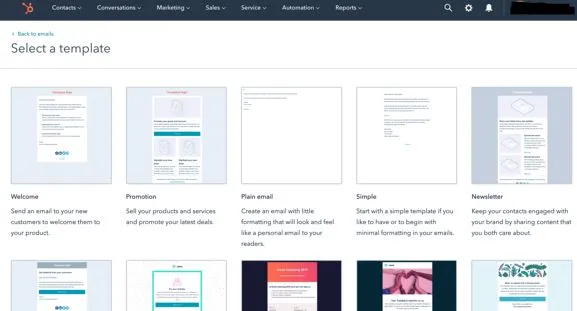
Hubspot is the tool I now use for my main affiliate marketing business. It combines a free CRM with powerful email marketing features that scale as you grow. The integration is seamless because they are built by the same company, not patched together.
Pros:
- Free CRM includes contact management, deal tracking, and task automation
- Email marketing tools integrate directly with CRM data for personalization
- Visual workflow builder lets you create complex automations based on any CRM field
- Detailed reporting shows revenue attribution from each email campaign
- Native integration with Gmail, Outlook, and most form builders
- Excellent educational resources and customer support
Cons:
- Pricing jumps significantly as you add more contacts
- Can feel overwhelming with many features you may not need initially
- Email template builder is less flexible than dedicated email platforms
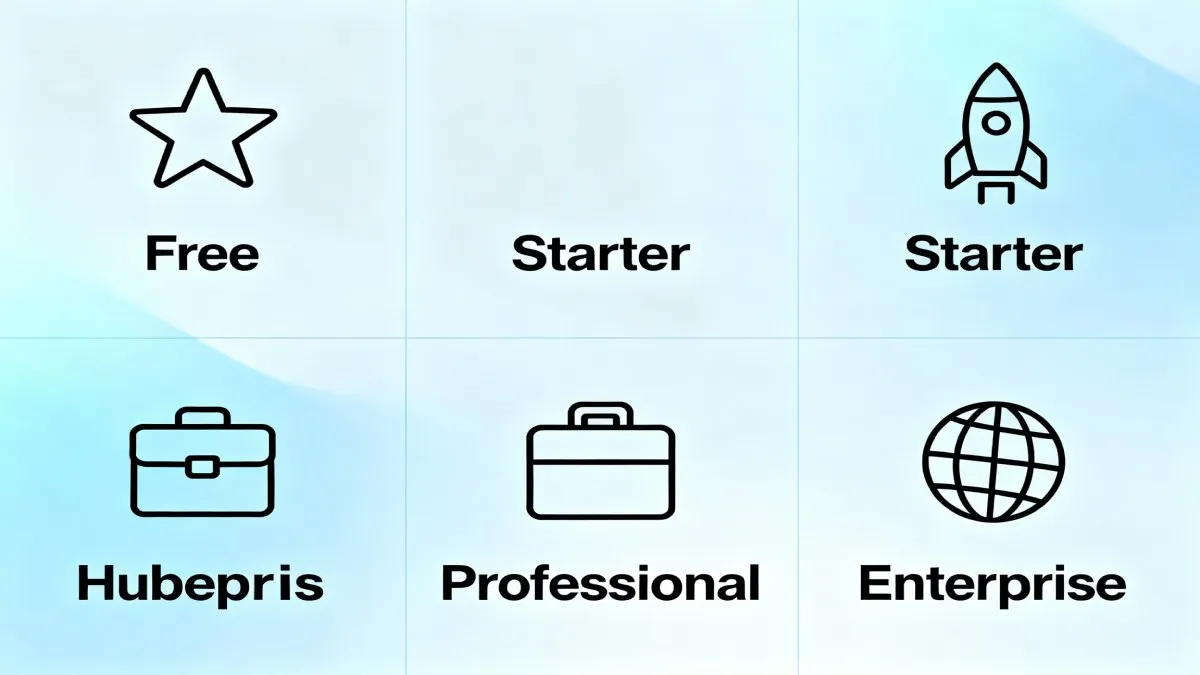
Pricing: Free CRM includes basic email tools. Marketing Hub Starter begins at $20/month for 1,000 contacts. Professional plan at $890/month adds advanced automation and reporting.
Who Should Use: Businesses that want one platform to handle CRM, email, and future marketing needs without integration headaches.
Why I Chose Hubspot: The native integration between CRM and email is unmatched. When a lead fills out my affiliate funnel form, they instantly enter a personalized email sequence based on their answers. No manual work, no delays.
Try Hubspot CRM and Email Marketing Free or Cancel Anytime
Read More: How to Automate Sales Process with HubSpot CRM: Complete Guide
2. ActiveCampaign – Best for Advanced Email Automation Workflows
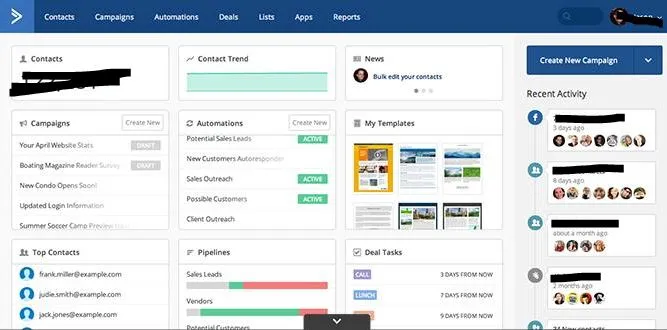
Before Hubspot, I used ActiveCampaign for two years. Its automation builder is more visual and flexible than most competitors, letting you create if then branches based on almost any condition.
Pros:
- Visual automation builder with conditional logic and split testing
- CRM includes lead scoring that updates based on email engagement
- Site tracking shows which pages contacts visit before and after emails
- Integration with over 850 apps including e-commerce platforms
- Predictive sending optimizes email delivery time per contact
Cons:
- CRM features are not as robust as dedicated CRM platforms
- Learning curve is steep for complex automations
- Support can be slow on lower tier plans
Pricing: Starts at $15/month for 500 contacts with basic automation. Plus plan at $49/month adds CRM features. Professional plan at $149/month includes predictive sending and attribution.
Who Should Use: Marketers who prioritize email automation sophistication over deep CRM capabilities.
Why I Chose ActiveCampaign: The automation builder let me create affiliate nurture sequences that adapted based on which links subscribers clicked, sending them down different product promotion paths.
Get Exclusive Deal on ActiveCampaign Today
3. Mailchimp – Best for Beginners with Simple Needs
Mailchimp is where I started my email marketing journey. Its CRM features have grown significantly, making it a decent entry level option for best CRM with email marketing integration.
Pros:
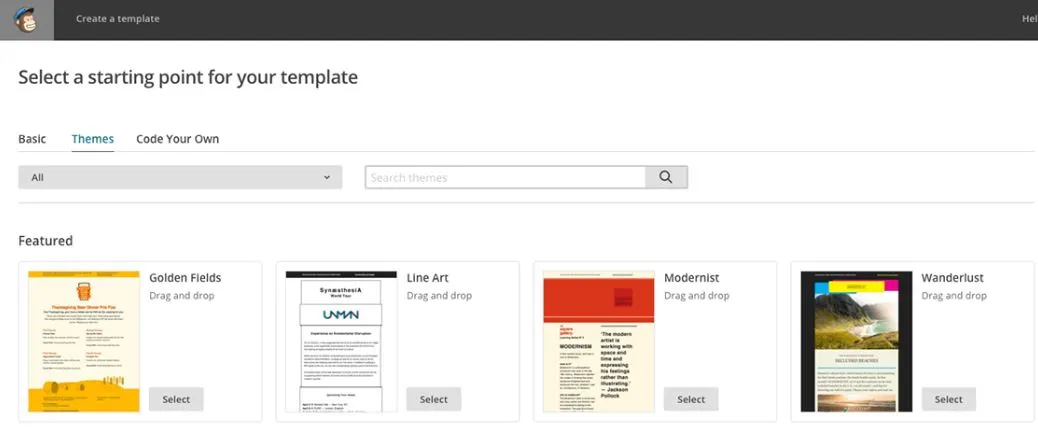
- Extremely user friendly interface with drag and drop email builder
- Free plan includes CRM basics and email for up to 500 contacts
- Pre built templates for common business types and campaign goals
- Built in creative assistant helps design emails quickly
- Integrates with most e-commerce platforms and website builders
Cons:
- CRM functionality is basic compared to dedicated CRM tools
- Automation features are limited on free and lower tier plans
- Pricing becomes expensive as your list grows
- Reporting is less detailed than competitors
Pricing: Free plan for up to 500 contacts. Essentials plan at $13/month adds automation. Standard plan at $20/month includes retargeting ads and advanced segmentation.
Who Should Use: Solopreneurs and small businesses just starting with email marketing who need simplicity over power.
Why I Chose Mailchimp: When I had under 500 contacts, the free plan let me test email marketing without financial risk. The templates helped me create professional looking campaigns quickly.
Start Your Free Mailchimp Trial Now
4. Sendlane – Best for E-commerce Email Automation
Sendlane is built specifically for e-commerce businesses, and I tested it for a dropshipping store project. The deep integration with Shopify and WooCommerce sets it apart.
Pros:
- Deep e-commerce integration with Shopify, WooCommerce, and BigCommerce
- Abandoned cart emails pull product images and details automatically
- Behavior based triggers for browse abandonment and product views
- Multivariate testing for email subject lines and content blocks
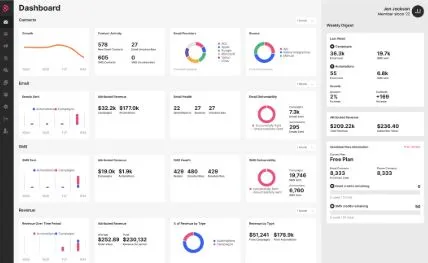
- CRM includes purchase history and lifetime value calculations
Cons:
- No free plan, only a 60 day trial
- Starting price is higher than most competitors
- Less suitable for non e-commerce businesses
Pricing: Starts at $100/month for up to 5,000 contacts. Growth plan at $150/month adds advanced reporting and SMS marketing.
Who Should Use: E-commerce store owners who need powerful automation based on shopping behavior.
Why I Chose Sendlane: For my e-commerce project, abandoned cart emails generated 30% of recovered revenue. The product recommendations based on purchase history increased average order value by 25%.
Get Sendlane Exclusive E-commerce Deal
5. Keap – Best for Small Business Sales and Marketing Automation
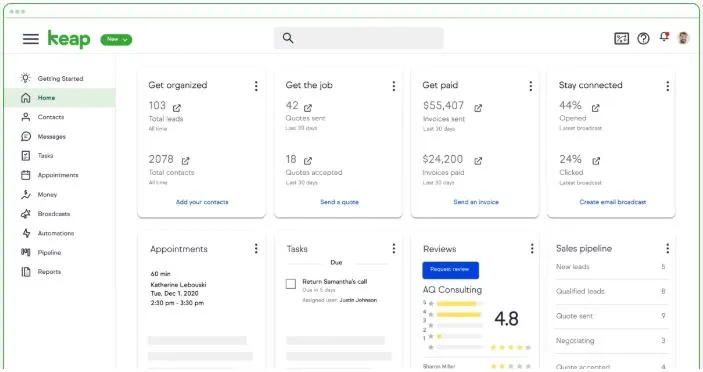
Keap, previously Infusionsoft, focuses on automating the entire client journey from first contact to payment. I used it for a coaching program where I needed to combine appointments, payments, and email follow ups.
Pros:
- Combines CRM, email marketing, appointment scheduling, and payment processing
- Automated follow up sequences after appointments or purchases
- Invoice and quote management integrated with customer records
- Text message marketing included in higher plans
- Dedicated support team helps with setup
Cons:
- Higher starting price than most alternatives
- Setup can be complex and may require help
- Email template designs are dated
- Not ideal for businesses with simple needs
Pricing: Starts at $159/month for 1,500 contacts and one user. Max plan at $229/month adds e-commerce and more users.
Who Should Use: Service businesses that need to automate appointments, payments, and follow ups in one system.
Why I Chose Keap: The appointment reminders and follow up sequences reduced no-shows by 40% and increased client retention by 25% through automated check ins.
Instant Access to Keap Free Trial
6. Zoho CRM Plus – Best for Budget Conscious Growing Teams
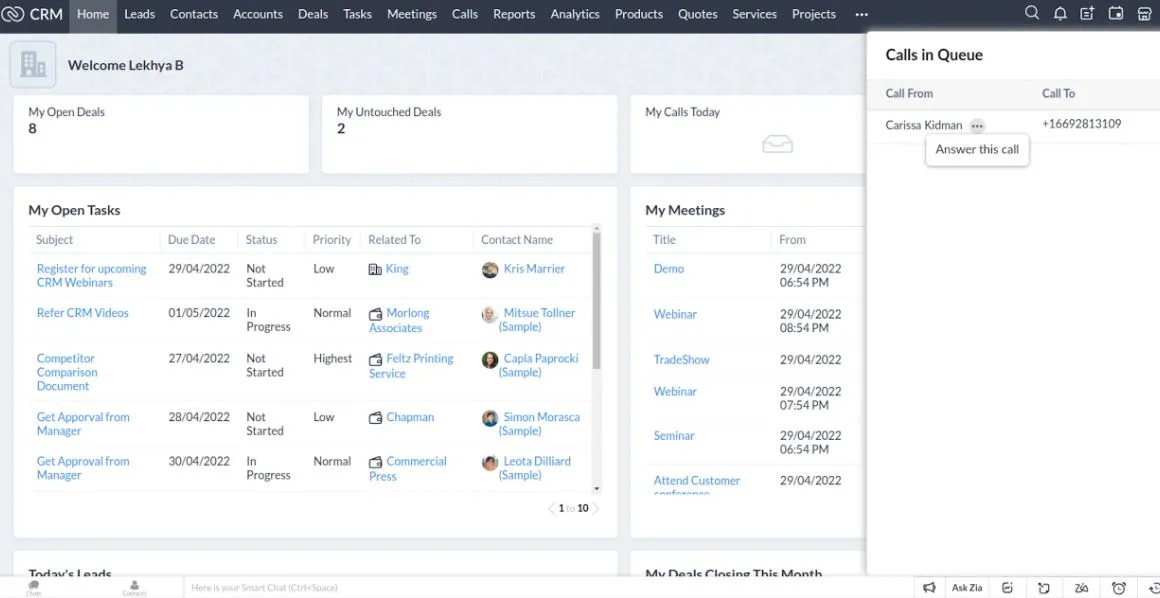
Zoho CRM Plus offers a full suite of business tools at a fraction of the cost of competitors. I tested it for a client project where budget was tight but needs were complex.
Pros:
- Includes CRM, email marketing, help desk, project management, and analytics
- Highly customizable workflows and fields
- AI assistant Zia provides lead predictions and email sentiment analysis
- Integration with Zoho Books for accounting and Zoho Desk for support
- Strong email marketing with automation and A/B testing
Cons:
- Steep learning curve due to many features
- Interface feels dated compared to modern tools
- Support quality varies by region and plan level
- Email builder is less intuitive than competitors
Pricing: $57/month per user includes full suite. CRM and email marketing available separately at lower cost.
Who Should Use: Growing teams that need multiple business tools and want to keep costs low.
Why I Chose Zoho: For the price, no other tool offered CRM, email marketing, help desk, and project management in one integrated platform.
Claim Your Zoho Discount and Save Monthly
7. Pipedrive with Campaigns – Best for Sales Focused Teams
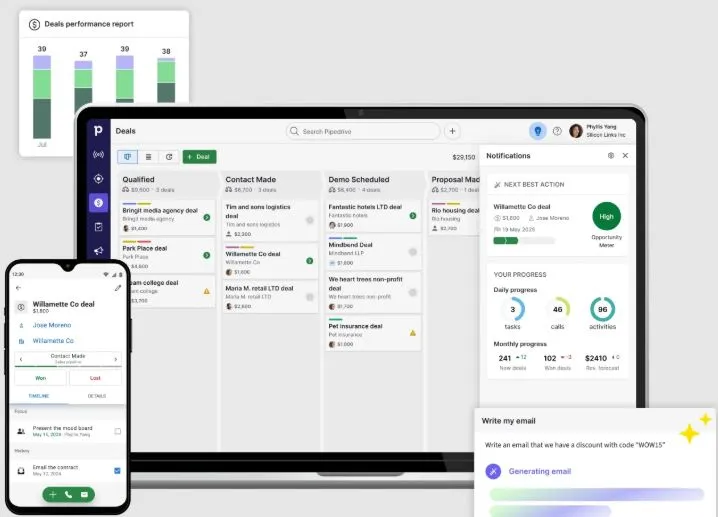
Pipedrive is a sales CRM first, and its Campaigns add on brings email marketing directly into the pipeline view. I used it when managing a sales team focused on B2B affiliate partnerships.
Pros:
- Visual pipeline makes it easy to see which emails move deals forward
- Email campaigns can be triggered based on deal stage changes
- Email tracking shows when prospects open and click
- Simple interface that sales teams adopt quickly
- Strong reporting on email impact on pipeline velocity
Cons:
- CRM is sales focused, lacking broader marketing features
- Campaigns add on costs extra on top of CRM subscription
- Email templates are basic compared to dedicated email tools
- Limited automation compared to ActiveCampaign or Hubspot
Pricing: CRM starts at $20/month per user. Campaigns add on starts at $13/month for 1,000 contacts.
Who Should Use: Sales teams who want email marketing tightly integrated with their pipeline management.
Why I Chose Pipedrive: The visual pipeline helped my sales team see which email sequences were actually moving deals forward, not just getting opens.
See Why Sales Teams Trust Pipedrive
8. Freshsales Suite – Best for AI Powered Lead Scoring
Freshsales Suite, part of Freshworks, includes Freddy AI which scores leads and suggests next best actions. I tested it for a lead generation site where we collected hundreds of leads daily.
Pros:
- AI powered lead scoring based on email engagement and page visits
- Email sequences can be triggered by score changes
- Built in phone and chat integration for omnichannel follow up
- Email templates with dynamic fields from CRM
- Affordable pricing for small to medium businesses
Cons:
- Email marketing features are not as deep as dedicated platforms
- Automation builder is less visual than ActiveCampaign
- Reporting could be more detailed for email performance
Pricing: Free for basic CRM. Growth plan at $15/month per user adds email sequences. Pro plan at $39/month per user adds AI scoring and advanced workflows.
Who Should Use: Businesses with high lead volume who need AI to prioritize follow up.
Why I Chose Freshsales: The AI scoring helped my sales team focus on the 20% of leads most likely to convert, increasing efficiency by 35%.
Join Thousands Who Trust Freshsales AI
Comparison Table: Hubspot vs Alternatives for CRM with Email Marketing Integration
| Feature | Hubspot | ActiveCampaign | Mailchimp | Sendlane |
|---|---|---|---|---|
| Native CRM Integration | Excellent | Good | Basic | Strong for e-commerce |
| Email Automation Complexity | High | Very High | Medium | High for e-commerce |
| Free Plan | Yes | No | Yes | No |
| Starting Price | $20/month | $15/month | $13/month | $100/month |
| Learning Curve | Medium | High | Low | Medium |
| Best Unique Feature | All in one platform | Visual automation builder | Simplicity and templates | E-commerce behavior triggers |
How to Choose the Best CRM with Email Marketing Integration for Your Needs
Based on my testing, here is how to decide:
- Choose Hubspot if: You want one platform that handles everything and can scale with your business
- Choose ActiveCampaign if: You need the most powerful email automation workflows
- Choose Mailchimp if: You are just starting and want the simplest path to sending emails
- Choose Sendlane if: You run an e-commerce store and need behavior based email triggers
- Choose Keap if: You need to automate appointments, payments, and follow ups together
- Choose Zoho if: You want multiple business tools at the lowest possible price
- Choose Pipedrive if: Your sales team lives in the pipeline and wants email tied directly to deals
Implementation Steps: How I Set Up My CRM with Email Marketing Integration
- Import and Clean Data: I exported contacts from my old systems, removed duplicates, and tagged them based on source and engagement
- Map the Customer Journey: I drew out the steps from first visit to purchase, identifying where emails should trigger
- Build Core Automations: I created welcome sequences for new leads, nurture sequences for prospects, and re-engagement for cold contacts
- Connect Forms and Website: I integrated my opt in forms so new leads automatically enter the CRM and start email sequences
- Test Everything: I submitted test contacts through every form and confirmed they received the right emails at the right times
- Train the Team: I documented the process and trained my virtual assistant on how to manage contacts and campaigns
- Monitor and Optimize: I review reports weekly to see which emails drive the most conversions and adjust accordingly
Using Semrush to Optimize Your Email Content Strategy
Once your CRM and email integration is running, I use Semrush to research what topics my audience cares about. I look at keyword trends and common questions, then create email content around those themes. This ensures my emails stay relevant and valuable, which improves open rates and conversions.
For example, I noticed through Semrush that people were searching for best email marketing practices for affiliates. I created a three part email series on this topic, sent it to my segmented list of affiliate marketers, and saw a 28% increase in affiliate link clicks.
When to Hire Fiverr Experts for CRM and Email Setup
Setting up a CRM with email marketing integration can be complex. If you are not tech savvy or your time is better spent on sales and content creation, hiring a Fiverr expert makes sense. I have used Fiverr professionals to:
- Configure automation workflows based on my customer journey map
- Design professional email templates that match my brand
- Clean and import large contact lists without errors
- Set up integration between my CRM, website forms, and payment processors
A good Fiverr expert can set up your entire system in a few days for a fraction of the cost of doing it yourself through trial and error.
Join Thousands Who Trust Fiverr for CRM and Email Setup
Common Mistakes to Avoid When Setting Up CRM with Email Integration
- Not Cleaning Data First: Importing messy data creates duplicate contacts and broken automations
- Over Complicating Workflows: Start with simple sequences, then add complexity based on results
- Ignoring Email Deliverability: Set up proper SPF, DKIM, and DMARC records to avoid spam folders
- Sending Too Many Emails: Just because you can automate does not mean you should flood inboxes
- Not Testing on Mobile: Over 60% of emails are opened on mobile devices
- Forgetting Unsubscribe Links: Every email must include clear unsubscribe options to stay compliant
Email Deliverability Tips I Learned Through Testing
Your best CRM with email marketing integration is useless if emails land in spam. Here is what I do:
- Warm Up Email Addresses: Start with small sends to engaged contacts, gradually increasing volume
- Use a Professional Domain: Send from your business domain, not Gmail or Yahoo
- Authenticate Properly: Set up SPF, DKIM, and DMARC records in your domain DNS
- Segment by Engagement: Send more frequently to engaged contacts, less to cold leads
- Monitor Metrics: Keep bounce rates under 2% and spam complaints under 0.1%
- Clean Lists Regularly: Remove hard bounces and unengaged contacts every quarter
Measuring ROI from CRM with Email Marketing Integration
I track these metrics monthly using my integrated reporting:
- Cost per Lead: Total tool cost divided by new leads generated
- Lead to Customer Rate: Percentage of leads that become customers after email nurture
- Email Revenue Attribution: Revenue from customers who clicked email links before purchasing
- Time Saved: Hours previously spent on manual list management, now automated
- Customer Lifetime Value: Increase in average customer value from better follow up
Since implementing best CRM with email marketing integration, my cost per lead dropped by 40%, lead to customer rate increased by 25%, and I save approximately 10 hours per week on manual tasks.
Future of CRM and Email Marketing Integration
The trend is clear: CRM and email marketing are becoming one unified system. AI is playing a bigger role in predicting the best send times, subject lines, and content for each contact. I expect to see:
- More AI powered content suggestions based on CRM data
- Voice activated CRM updates and email sending
- Deeper integration with social media messaging platforms
- Predictive lead scoring that automatically adjusts email frequency
- Unified customer profiles that include email, SMS, chat, and social interactions
FAQs About Best CRM with Email Marketing Integration
What is the difference between a CRM with email marketing and separate tools
A CRM with email marketing integration keeps all customer data and email activity in one system. Separate tools require manual data transfer and cannot trigger real time personalized emails based on CRM changes.
Can I use a free CRM with email marketing integration for affiliate marketing
Yes, Hubspot free CRM includes basic email tools that work for starter affiliate funnels. As you scale, you will want paid features like automation and advanced reporting.
How much does the best CRM with email marketing integration cost
Entry level tools like Mailchimp start around $13/month. Mid tier options like Hubspot and ActiveCampaign run $15-50/month. Enterprise solutions like Keap and Sendlane start at $100-150/month.
Which tool is best for e-commerce affiliate marketing
Sendlane is specifically built for e-commerce with behavior based triggers. Hubspot also works well with its workflow builder and tracking.
Do I need technical skills to set up CRM email integration
Basic setup is beginner friendly. Complex automations may require learning or hiring a Fiverr expert. Most platforms offer setup assistance.
Can these tools integrate with my existing website and forms
Yes, all major tools offer integrations with WordPress, Shopify, and form builders like Gravity Forms and Typeform.
How do I migrate from separate CRM and email tools to an integrated system
Export contacts from both systems, clean and merge the data, then import into your new integrated tool. Most platforms provide migration assistance.
What is the best CRM with email marketing integration for beginners
Mailchimp has the lowest learning curve. Hubspot offers the best free plan with room to grow.
How do I measure email marketing ROI within my CRM
Look for revenue attribution reports that connect email clicks to closed deals. Hubspot and ActiveCampaign excel at this.
Can I send unlimited emails with these integrated systems
Most plans include generous email limits based on contact count. Check each tool's specific email sending limits before choosing.
What happens if I exceed my contact limit
Tools typically charge per additional contact block. Monitor your contact count and clean inactive subscribers regularly.
Is my data safe in these cloud based CRM email systems
Major platforms like Hubspot, ActiveCampaign, and Mailchimp maintain enterprise grade security and compliance certifications.
Can I use these tools for SMS marketing as well
Many integrated platforms like Keap, Sendlane, and Hubspot offer SMS as an add on feature within the same system.
How often should I clean my CRM and email list
I clean my lists quarterly, removing hard bounces, unsubscribes, and contacts who have not engaged in 6 months.
Which tool offers the best email deliverability rates
Hubspot and ActiveCampaign maintain strong sender reputations. Your deliverability also depends on your list quality and authentication setup.
Final: My Recommendation for Best CRM with Email Marketing Integration
After testing and using these tools in real affiliate marketing campaigns, here is my clear recommendation:
For Most Users: Start with Hubspot. The free CRM gives you a risk free way to experience true integration. As your list and revenue grow, the paid plans scale reasonably and the platform can handle everything from simple newsletters to complex affiliate funnels.
For Automation Lovers: Choose ActiveCampaign if you want the most powerful visual workflow builder and enjoy creating intricate email journeys.
For E-commerce Focus: Pick Sendlane if your primary goal is to recover abandoned carts and increase customer lifetime value through behavior based emails.
For Budget Conscious: Go with Zoho CRM Plus if you need multiple business tools and want to minimize monthly costs.
The best CRM with email marketing integration is the one you actually use consistently. I chose Hubspot because it removed the friction between my contact data and my email campaigns, letting me focus on creating valuable content for my audience rather than managing tools.
Get Hubspot CRM and Email Integration Free Today
Hire Fiverr Experts to Set Up Your CRM and Email System
Read More : Best CRM with WhatsApp Integration: Guide for Modern Businesses

Julie Jung
Julie is a Senior Research Analyst at Shrtu concentrating on sales and marketing software. Prior to joining Shrtu, she worked at a Big 4 accounting firm and at a BI software company where her roles focused on supporting growth and B2B marketing and sales efforts. These experiences have cultivated her passion for learning how technology impacts businesses, and how it delivers results. She earned her Bachelor of Science in Marketing from the University of South Florida.